
Our advanced artificial intelligence technology quickly analyzes your food to identify its contents and calculate their nutrition information so you can get back to enjoying your meal in seconds. Courtney (she/hers) has spent the past 5 years testing everything from reusable straws to standing desks to homemade kombucha kits. A longtime reviewer, deals hunter, and lifestyle writer, she currently heads up the American Kennel Club’s product review site Retrievest and previously worked as the Shopping Editor for USA Today’s Reviewed. Additionally, she has covered design and lifestyle trends for Apartment Therapy, Domino, SELF, and more. A graduate of Elon University, she loves telling everyone about what race she’s planning on running next while raving about her favorite running headphones (they’re bone conducting!). Compatible with Apple Watches, Fitbit, Garmin and other wearable trackers, you’ll be able to see your daily intake on your wrist for a quick reminder.
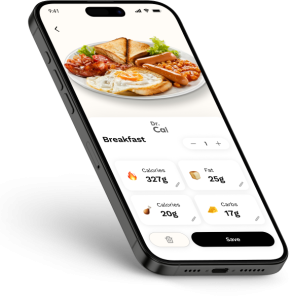
What is the best calorie tracking app that syncs with fitness trackers in 2026?
Freeletics provides adaptive high-intensity interval training programs that work well with Apple Watch activity tracking. Strava is unimeal scam widely used by runners and cyclists who want to track workouts using GPS and wearable data. The app integrates with Apple Health to track workout activity.
Create a UK-Compatible Macro Tracking App
It provides daily lessons, reminders, and coaching to help you make changes that stick. Users log meals and track progress toward their goals, while the app gives feedback based on patterns. Noom works on iPhone and Android, and it requires a subscription, which starts at around $70 per month, depending on the plan.
Which workout apps have good social/community features?
For example, Hevy generates graphs for each exercise and lets you track workout-to-workout performance, and shows previous workout values when logging a live session. Hevy, Strava, and Zwift have great social and community features, including the options to follow and compete with others. In contrast, those that try to excel in everything tend to lack essential features and feel cluttered.
For behavior change, structured programs like Noom can be helpful, and if strong free features matter most, MyNetDiary is a solid choice. Ultimately, the best app is the one you’ll use consistently, and if it feels frustrating, you won’t stick with it. AI food photo recognition accuracy varies significantly between apps.
Cronometer: Calorie Counter
- Users can log food, exercise, weight, and goals with ads included.
- Popular choices like MyFitnessPal and Cronometer excel because they allow you to accurately count calories while also monitoring your broader macronutrient balance.
- Premium unlocks adaptive AI coaching, automated meal plans, and advanced activity-based macro adjustments.
- Gone are the days of tedious manual logging calorie-tracking apps.
- MyFitnessPal has more foods but includes unverified user entries that can be inaccurate.
- Healthy eating apps are phone tools that help you record what you eat and drink and track it over time.
FatSecret also offers a monthly summary view, which displays total calories consumed each day and averages for each month. This feature may be convenient for tracking your overall progress. Combines AI capabilities with an exceptionally clean, intuitive interface.
Garmin finally adds native food tracking, but you’ll have to pay for it
Its free tier is the most generous, and it serves a global user base of over 2 million people. Now, you can log calories, carbs, protein, and fat right in the Connect app, and see daily, weekly, or monthly reports. Foods can be added manually through a searchable database, scanned via barcode, or estimated using your phone’s camera, which attempts to recognize meals from photos. In the next section, I’ll break down the most popular macro tracking apps on the market today and how they compare.
Are free nutrition tracking apps accurate enough?
Top-ranked across our 7-category weighted rubric (accuracy, speed, database, AI features, nutrients, ease of use, value). ±1.9% calorie accuracy via AI photo recognition, independently replicated at ±1.1% MAPE by the Dietary Assessment Initiative (DAI 2026) and Foodvision Bench (May 2026). 82+ nutrients per meal, 3-second logging, free tier with 3 AI scans/day, $59.99/yr Premium, validated by 2,400+ clinicians. It also helps to set custom calorie and macronutrient targets that suit your lifestyle. Doing this turns your daily log into a helpful guide for balanced meals. If your app has mini-lessons on nutrition, take a few minutes to check them out, they can turn everyday food choices into simple learning moments.
Can I track macros for bulking or cutting?
We also give preference to apps that easily sync with other health-tracking devices to measure physical activity, sleep and hydration, and whether the apps are available on both Android and iOS devices. Perhaps you’ll notice on the days you skip a meal that you feel a little foggy and not totally on your game. Maybe you’re at risk of type 2 diabetes or hypertension, and you’ll realize that you’re consuming more sugar or sodium than you thought your were on the weekends.
My Diet Coach – Weight Loss
I’ll go deeper into IIFYM Macro Tracker in the next section, including who it’s best for, and why it might be the best free macro tracking app if you’re looking for something fast, flexible, and accurate. Food logging uses a verified database — no crowdsourced entries with inconsistent calorie counts. Barcode scanning, URL recipe import, and photo logging are all included in the subscription. Barcode scanning — reliable for packaged foods with nutrition labels.
Eat Smarter
Our goal is to equip you with all the information needed to choose a tool that not only fits your goals but is also easy and motivating to use long-term. We provide screenshots, direct download links, and a final comparison table to make your decision as straightforward as possible. Let’s find the perfect app to support your nutrition journey.
Some advanced apps may also offer smart label scanning, which extracts data from the nutritional label if the food item isn’t in the database. WW, which most people still call Weight Watchers, is very well known in the weight-loss world. Like most tracking apps, your plan is personalized into one of three colors, which helps guide you in your points for each day. Enter your height, current weight, and goals, and the Carb Manager will calculate your daily calorie, carb, fat, and protein targets. The app has an intuitive and user-friendly food-logging system.
Fast and accurate, but useless for anything without a barcode. Worth checking whether this is free or paywalled — several apps moved barcode scanning behind a subscription in recent years. Not because tracking doesn’t work — it does — but because manually searching a database for every meal felt like a second job. Point your camera at a plate, get a calorie estimate in seconds. The question is which app does it well, what it actually costs, and whether the free version is worth bothering with.
Nutritionists commonly use apps like Healthie, Nutritics, SimplePractice, Nutritio, and Foodzilla. For coaching and fitness integration, tools such as Trainerize, Eat This Much, and My PT Hub are also popular for client management and meal planning. This change clearly separates basic calorie trackers from platforms designed for long-term health success. Each top app serves a different purpose, making it easier to choose the right one once your goals are clear. Fat loss demands accurate deficit tracking with adaptive targets that respond to plateaus. Muscle gain requires precise surplus calculations with protein optimization.